
Spanish Christmas Traditions: Food, Dates and Three Kings Day

I love traveling and sharing my experiences. For me it's important to share only practical and useful information in the blog, things that actually help, whether you're planning a trip to Costa del Sol or thinking about renting in Spain.
Spanish Christmas traditions explained: what Spain eats on Christmas Eve, the twelve grapes, El Gordo, roscón de Reyes and why presents come on 6 January.
In Spain, Christmas is a season rather than a single day. It starts when towns switch on their lights in late November and ends with the Three Kings on 6 January, with family dinners, carols, a national lottery and street parades along the way.
Some of it will feel familiar and some of it won't. The big family meal is on 24 December, not the 25th. Boxing Day is a normal working day in most of the country. And although Papá Noel now visits many homes, the main presents traditionally arrive on the morning of 6 January.
This guide explains the Christmas traditions from Spain you will see in December and January: the key dates, what people eat and when, who brings the presents, how Madrid, Barcelona and Seville celebrate, how New Year's Eve and Three Kings Day work, and the Andalusian customs you can still watch on the Costa del Sol.
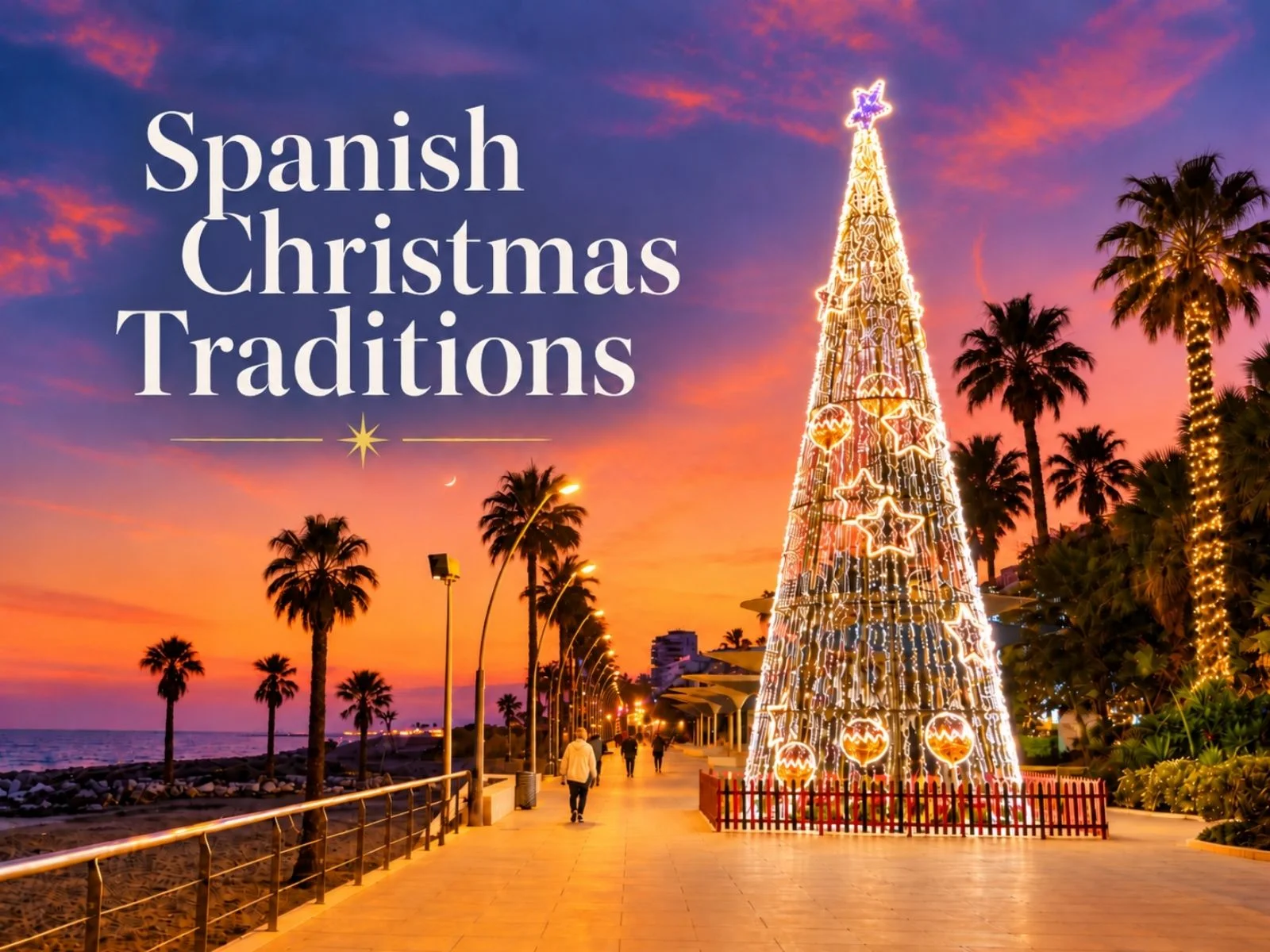
1. Key Dates of Christmas in Spain
Christmas traditions from Spain follow their own calendar. Three things to know before you look at it: the main family dinner is on Christmas Eve, 26 December is a working day in Andalucía and most of Spain, and the season runs until Three Kings Day on 6 January.
In Andalucía, the public holidays over Christmas 2026–27 are 7, 8 and 25 December and 1 and 6 January. Constitution Day falls on Sunday 6 December in 2026, so the holiday moves to Monday 7 December.
- Late November: the lights go on. Towns switch on their Christmas lights and the season begins.
- 8 December: Immaculate Conception. Public holiday. Together with Constitution Day it creates a long weekend, the puente, when many Spanish families travel.
- 22 December: El Gordo. The Christmas lottery draw, sung by schoolchildren on television all morning. Working day.
- 24 December: Nochebuena. Christmas Eve and the most important family dinner of the year. Working day, but shops close early.
- 25 December: Navidad. A quiet day with a long family lunch. Public holiday.
- 26 December. A normal working day in Andalucía, unlike in the UK. In Catalonia it is a public holiday, Sant Esteve.
- 28 December: Santos Inocentes. Spain's April Fools' Day. Working day.
- 31 December: Nochevieja. New Year's Eve, with twelve grapes at midnight. Working day, but shops close early.
- 1 January: Año Nuevo. A slow day with a late family lunch. Public holiday.
- 5 January: Cabalgata de Reyes. The Three Kings parade through every town. Working day.
- 6 January: Día de Reyes. Presents in the morning and roscón de Reyes. Public holiday.
Spend Christmas by the sea and cook your own festive dinner: local markets and fishmongers are full of seafood in the days before Christmas. Sunset Rental has apartments and villas in Estepona, Manilva and Sotogrande, many with sea views and a terrace where you can eat outside in the December sun. Here are three of our apartments in Sotogrande:


2. Christmas Eve and Christmas Day in Spain
To understand Christmas in Spain, start with the evening of 24 December. Christmas Day itself is much quieter.
🕯️ Nochebuena: Christmas Eve in Spain
Christmas Eve in Spain is called Nochebuena, literally "the good night", and it is when the whole family gathers. Grandparents, cousins and in-laws squeeze around one table. Dinner usually starts late, around 21:00 or 22:00, and goes on for hours.
Many families switch on the television at 21:00 for the King's Christmas Eve message, a short address to the country broadcast every year. After dinner, some go to Midnight Mass, the Misa del Gallo, while others stay at the table with turrón and cava, Spanish sparkling wine. You will find the typical menu in the food section below.
If you are visiting, plan ahead. Shops close early on the 24th, and many restaurants close in the evening or serve only set Christmas menus.
🎄 Christmas Day in Spain
Christmas Day in Spain is a public holiday and a slow one. Families meet again for a long, late lunch, often finishing the leftovers from the night before, and then go out for a walk. On the coast, that usually means a stroll along the seafront in the sunshine. In many homes Papá Noel leaves a small present in the morning, but the big present day is still to come.
Almost all shops and supermarkets are closed on 25 December. Some restaurants open for lunch with a Christmas menu, so book ahead.
3. Spanish Christmas Traditions: How Spain Celebrates
Spanish Christmas traditions mix religious customs, long family meals and lively street celebrations. If you only remember ten, make it these:
1. The alumbrado, the switch-on of the Christmas lights in late November.
2. The belén, or nativity scene, in homes, churches and town squares.
3. El Gordo, the Christmas lottery draw on 22 December.
4. Nochebuena, the big family dinner on Christmas Eve, and Midnight Mass.
5. Turrón, polvorones and mantecados on every Christmas table.
6. Zambombas, Andalusian Christmas gatherings with flamenco carols.
7. Día de los Santos Inocentes, Spain's April Fools' Day on 28 December.
8. The twelve grapes at midnight on New Year's Eve.
9. The Cabalgata de Reyes, the Three Kings parades on 5 January.
10. Presents from the Three Kings and roscón de Reyes on 6 January.
⭐ Belenes: nativity scenes
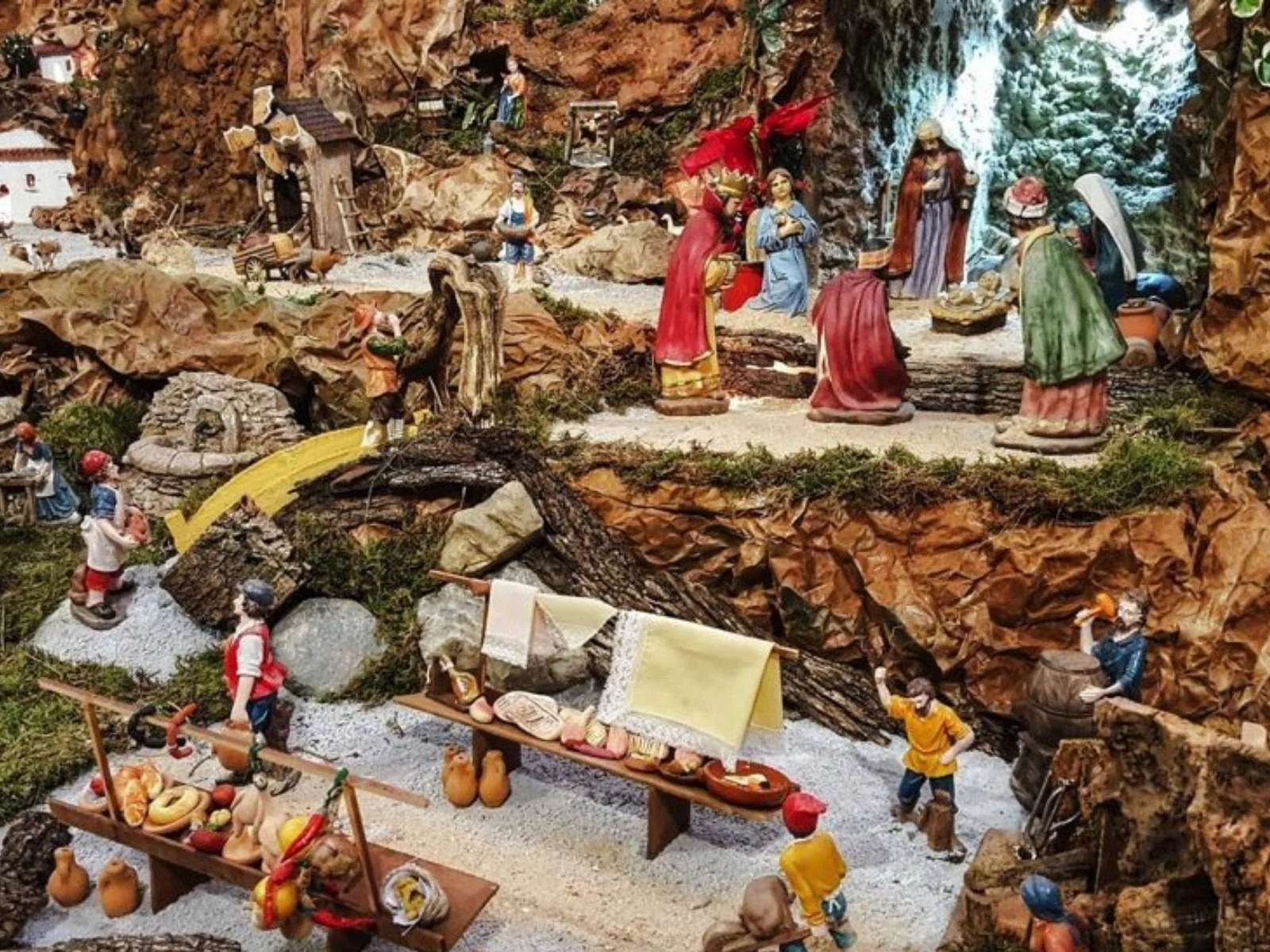
The nativity scene, or belén, is still a central part of Christmas in Spain. Town halls create large public displays, churches build their own, and some families spend weeks arranging elaborate scenes at home, with rivers made of foil, moss-covered hills and whole villages of tiny figures.
There are also belenes vivientes, or living nativity scenes, where local residents dress in costume and recreate Bethlehem with workshops, animals and traditional crafts. One of the prettiest on the coast is in Casares, described below.
🎀 Spanish Christmas decorations
Spanish Christmas decorations start with the belén, which in many homes is as important as the tree, or more so. The Christmas tree is a more recent arrival, but today many families put up both. The red poinsettia, called flor de Pascua in Spanish, is the classic Christmas plant and a popular gift when visiting friends.
Outside, balconies are hung with lights, and from early December you will see the Three Kings on many of them: figures of Melchior, Caspar and Balthazar climbing rope ladders up the front of buildings, ready for the night of 5 January. Christmas markets sell everything for the belén, from figures and stables to moss, cork and tiny lights.
✨ Christmas lights: the alumbrado
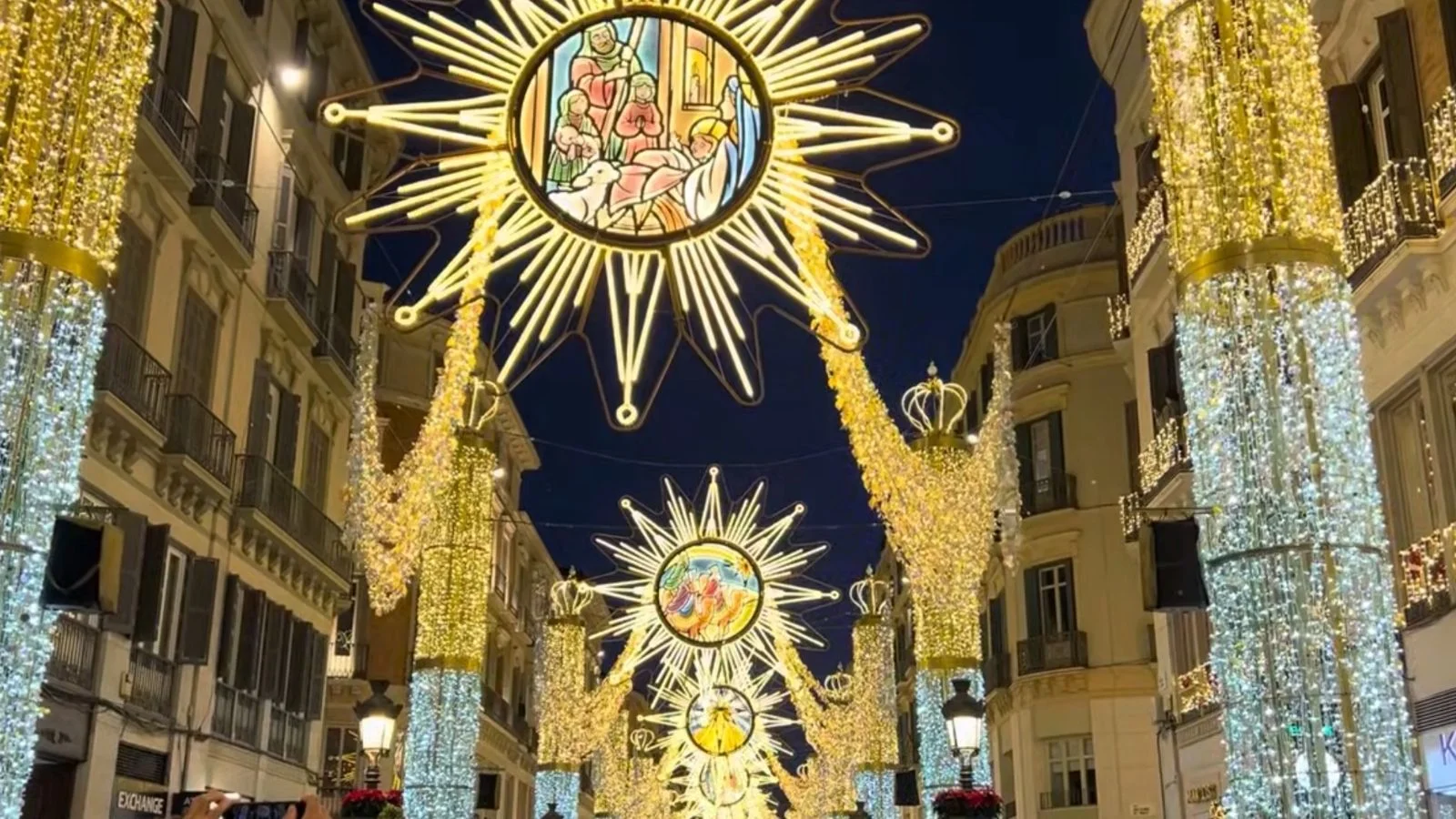
In Spain, Christmas officially starts when the lights go on. In late November every town holds its own encendido, a switch-on with music and crowds, and towns quietly compete to have the best street decorations.
On the Costa del Sol, the most famous lights are on Calle Larios in Málaga, where a canopy of lights covers the whole street and light-and-music shows run every evening. They are among the best-known Christmas lights in Spain. Closer to home, Estepona switches on its lights in Plaza Antonia Guerrero, and the flower-filled streets of its old town are at their prettiest after dark. Switch-on dates and show times are in our guide to Christmas on the Costa del Sol.
🎟️ El Gordo: the Christmas lottery
On 22 December, the Christmas lottery dominates the morning across Spain. Families, friends and colleagues often share tickets, sometimes bought months in advance. The winning numbers are sung by schoolchildren during a televised draw that lasts for hours.
You don't need to buy a ticket to see how much of a national ritual it has become. Sit in almost any busy café that morning and you'll probably hear the draw in the background.
🎁 Spanish Christmas gift traditions: who brings presents and when
Children in Spain can receive presents twice over the holidays, but the traditional gift-bringers are the Three Kings, not Santa.
- Papá Noel, 24–25 December. Many families now also give a smaller present from Santa on Christmas morning.
- The letter to the Kings. In December, children write a letter to the Three Kings (carta a los Reyes Magos) with their wish list. They hand it to a royal page or a Royal Postman, like the Cartero Real in Estepona.
- The night of 5 January. After the parade, children leave their shoes by the door or on the balcony, often with a snack for the Kings and water for their camels. In the morning, the presents are waiting.
- Carbón for the naughty. Parents jokingly warn that the Kings bring coal to children who misbehave. In practice, it is carbón dulce, a black sugar sweet sold in bakeries over the holidays.
- Gifts for adults. Adults often exchange presents on 6 January too. Among friends and colleagues, the amigo invisible (Secret Santa) is very common, and a shared lottery ticket is a popular gift in itself.
- The Basque Country. Here presents come from Olentzero, a charcoal burner who arrives on Christmas Eve.
If you are invited to a Spanish home over the holidays, a box of turrón, a bottle of cava or a good wine is always a welcome gift.
🪵 Caganer and the "pooping log": Catalonia's cheeky Christmas
Catalonia has two Christmas traditions that surprise every visitor. The first is the caganer, a small figure of a crouching man answering the call of nature, tucked away in a corner of the nativity scene. He is meant as a bit of earthy good luck, and finding him is part of the fun. Today Christmas markets also sell caganers made to look like footballers, politicians and celebrities.
The second is the Tió de Nadal, a decorated log with a smiling face, a red hat and a blanket. Families "feed" it through December, and on Christmas Eve or Christmas Day children tap it with sticks while singing a song until it "gives" them sweets and small presents. Its other name, caga tió, is why English speakers call it the "pooping log".
You won't find either tradition in Andalusian homes, but you may spot a caganer in a souvenir shop.
😜 28 December: Spain's April Fools' Day
Día de los Santos Inocentes falls on 28 December. Newspapers and television programmes sometimes publish deliberately false stories, while children traditionally play practical jokes such as sticking small paper figures onto someone's back.
4. Christmas Around Spain: Madrid, Barcelona and Seville
The main traditions are shared across Spain, but every region adds something of its own. These are the cities whose Christmas customs Spaniards talk about most.
🕛 Madrid
On New Year's Eve the whole country watches the clock on Puerta del Sol: its chimes at midnight are the ones Spaniards eat their twelve grapes to. Through December, the Christmas market on Plaza Mayor sells nativity figures, decorations, wigs and joke items for 28 December. For children, Cortylandia, a musical show with moving figures on the front of the El Corte Inglés store on Calle Preciados, has been a Madrid Christmas fixture for decades.
🛍️ Barcelona
Barcelona's Christmas market, the Fira de Santa Llúcia outside the cathedral, dates back to the 18th century. It is the place to buy moss and figures for the belén, and to see caganers and tiós in every size. In Catalonia, 26 December, Sant Esteve, is a public holiday, and families eat canelons, pasta rolls filled with the meat left over from Christmas Day.
💃 Seville and Jerez
In Seville, a large nativity fair is held each December near the cathedral, with figures by Andalusian craftsmen. Jerez de la Frontera is the home of the zambomba: in December, patios and squares fill with families singing flamenco carols, and the Jerez zambomba is protected as part of Andalusia's cultural heritage. Jerez is a little over an hour's drive from Sotogrande.
Two more names come up every Christmas. Vigo in Galicia has turned its huge light display into a national talking point, and Alcoy in Alicante claims the oldest Three Kings parade in Spain, held since the 19th century.
5. Spanish Christmas Food: Dishes and Desserts
Food is one of the most important Christmas traditions in Spain, and each key date has its own table. Here is the Spanish Christmas food you will meet: what a typical Christmas dinner in Spain looks like, and which sweets you will find on the coast.
🍽️ Christmas dinner in Spain
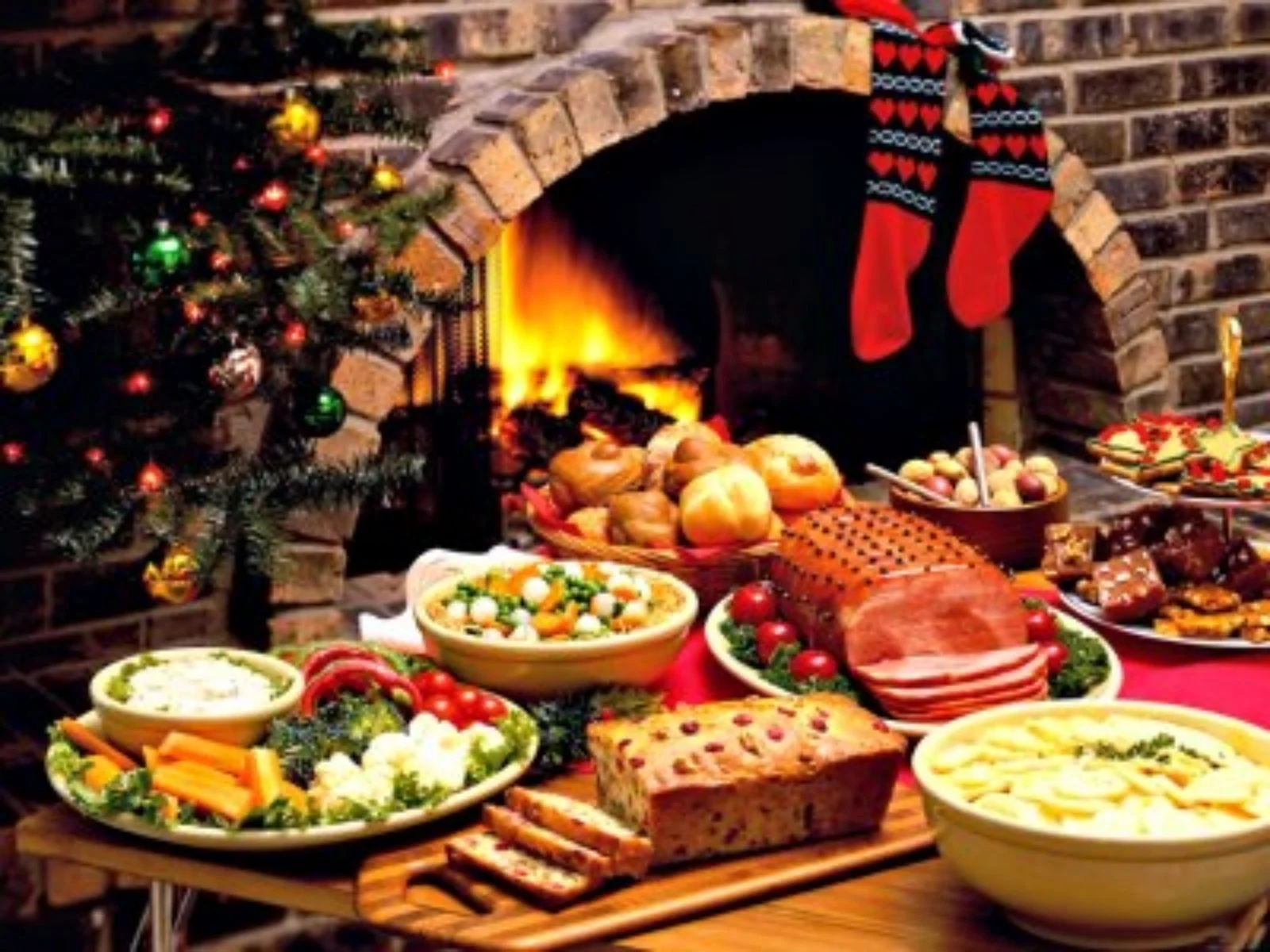
The main Christmas dinner in Spain is eaten on the evening of 24 December. Menus vary by region and family, but these are the classic Christmas dishes in Spain:
- Sopa de picadillo. A hot broth with fine noodles, diced ham, chopped egg and fried bread. In many Andalusian homes, this is how dinner starts.
- Jamón ibérico and cheese. Sliced thin and shared while everyone arrives.
- Langostinos and gambas. Prawns, boiled or grilled. Seafood prices rise sharply in the last days before Christmas.
- Besugo. Roast sea bream, a Christmas classic in Madrid and the north.
- Cordero or cochinillo. Roast lamb or suckling pig as the main course.
- Turrón, polvorones and mantecados. The Christmas sweets, served with cava.
The rest of the season follows the same rhythm. On Christmas Day, families finish the leftovers at a long lunch. On New Year's Eve there is another big dinner before the grapes, and many people end the night with chocolate con churros in the early hours of 1 January. On 6 January it is time for roscón de Reyes.
December is also the month of Christmas lunches and dinners with colleagues and friends, so if you want a restaurant table for a group, book early.
🍪 Spanish Christmas desserts: Málaga's favourites
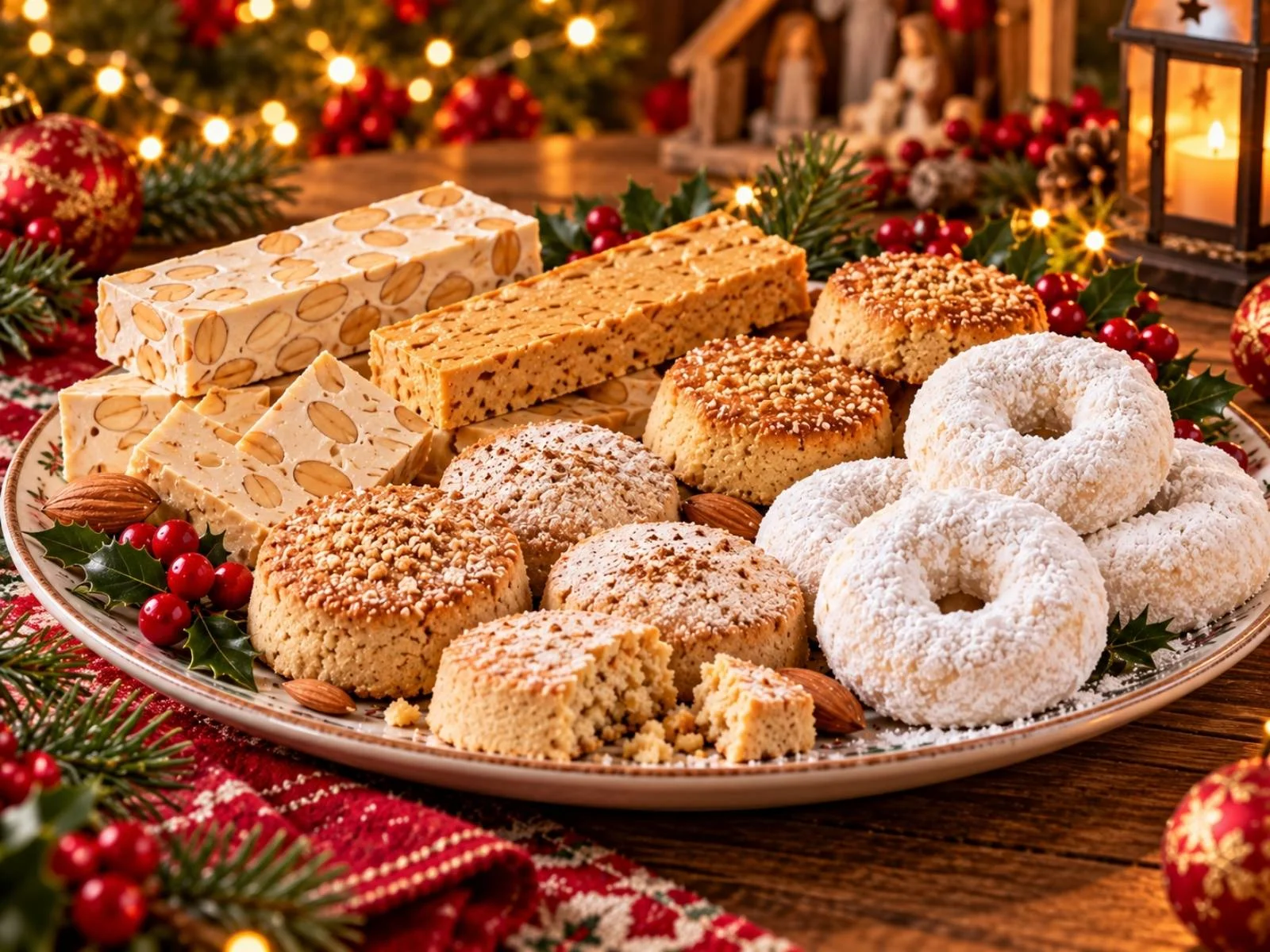
Turrón comes in two classic styles: hard turrón de Alicante with whole almonds, and soft turrón de Jijona made from ground almonds. Mantecados and polvorones are crumbly, shortbread-like sweets that both Antequera and Estepa claim as their own.
On this part of the coast, the Christmas sweet plate also has a strong Málaga accent. Look out for roscos de vino, small sugar-dusted rings made with sweet Moscatel wine, and borrachuelos, Málaga's take on pestiños: fried pastries coated in honey or sugar, sometimes filled with sweet potato or cabello de ángel, a sweet squash jam. Locals often serve them with a small glass of sweet Málaga wine, Moscatel or Pedro Ximénez.
Every supermarket sells roscos de vino in December, but in Málaga many people still buy them from traditional confectioners, such as Hermanos Montáñez in the seaside district of El Palo.
6. Andalusian Christmas Traditions on the Costa del Sol
Some of the oldest Christmas customs in Andalucía are still very much alive along the coast, and anyone can go and watch them.
🥁 Zambombas: Andalusian Christmas music
A zambomba is part concert, part neighbourhood Christmas party. Villancicos are sung in an Andalusian or flamenco style, accompanied by clapping and the low rhythmic sound of the zambomba, the traditional friction drum that gives the gathering its name.
The tradition is strongest in Jerez, but in December you will see zambombas on town programmes along the coast, and smaller ones are organised by bars and neighbourhood associations. If one appears on the programme for a nearby square, go.
🎻 Verdiales in Málaga
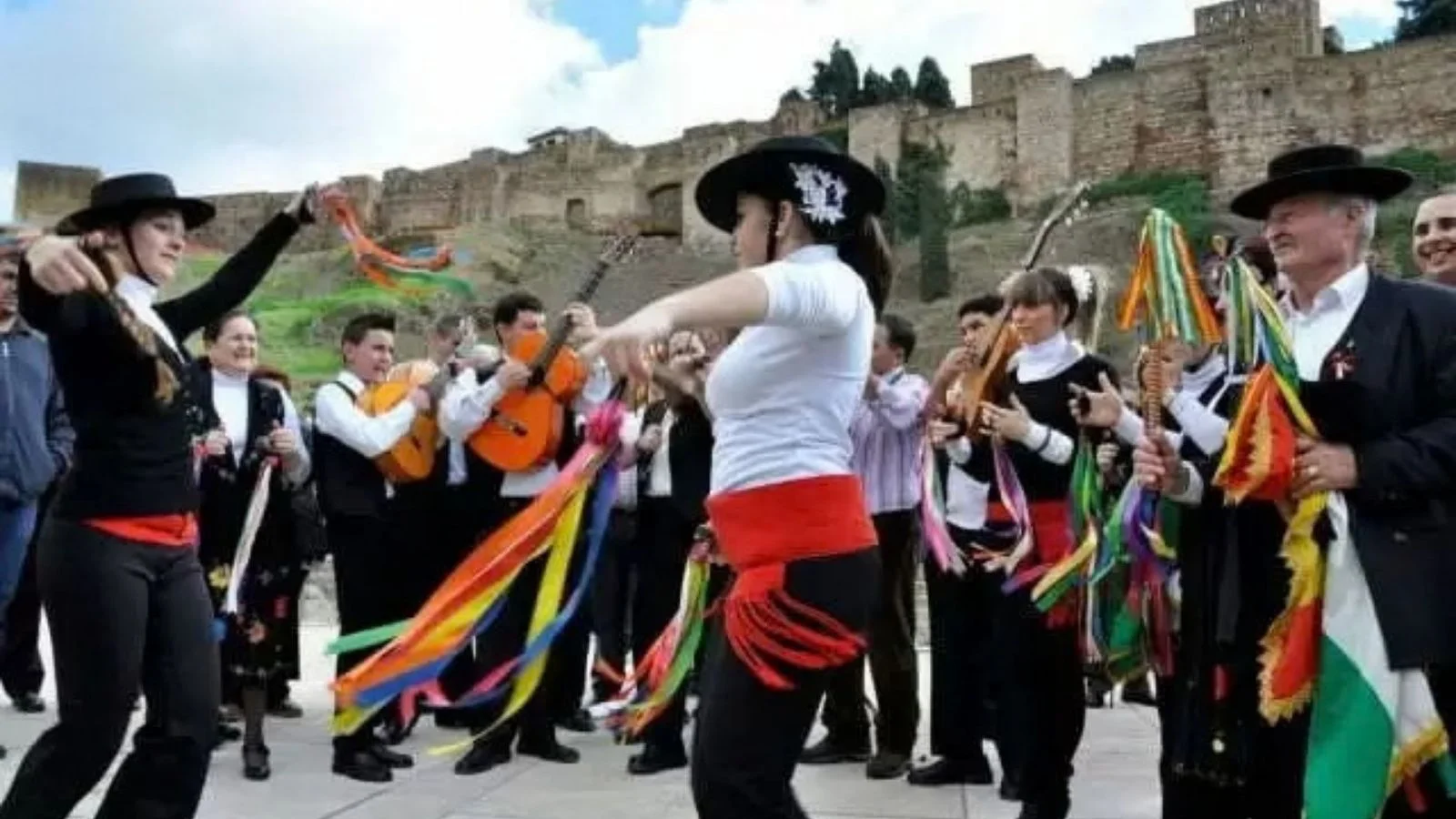
Verdiales are a rural style of fandango from the hills around Málaga, sung and danced to violin, guitars, tambourine, cymbals and castanets. Every 28 December for more than sixty years, around 25 groups, called pandas, have gathered in Puerto de la Torre on the edge of Málaga (Map). The musicians wear striking hats decorated with coloured ribbons, flowers and small mirrors, and the fiesta is part of the General Catalogue of Andalusian Historical Heritage.
🎶 Pastorales in Mijas Pueblo
Pastorales are traditional Christmas groups that sing old Andalusian villancicos. The best-known gathering on the coast, the Certamen de Pastorales Villa de Mijas, takes place on a Sunday shortly before Christmas on Plaza Virgen de la Peña (Map). It reached its 40th edition in 2025.
🐑 The living nativity in Casares
For one weekend in mid-December, the white village of Casares above Manilva turns its streets into Bethlehem (Map). Local residents, many of them children, recreate the nativity, and workshops revive old trades such as esparto weaving and pottery.
Dates and times for these events are in our guide to Christmas on the Costa del Sol.
7. New Year's Eve Traditions in Spain
The twelve grapes are the tradition most visitors notice first. At midnight, one grape is eaten with each of the twelve chimes of the clock. Most people follow the countdown from Madrid's Puerta del Sol on television.
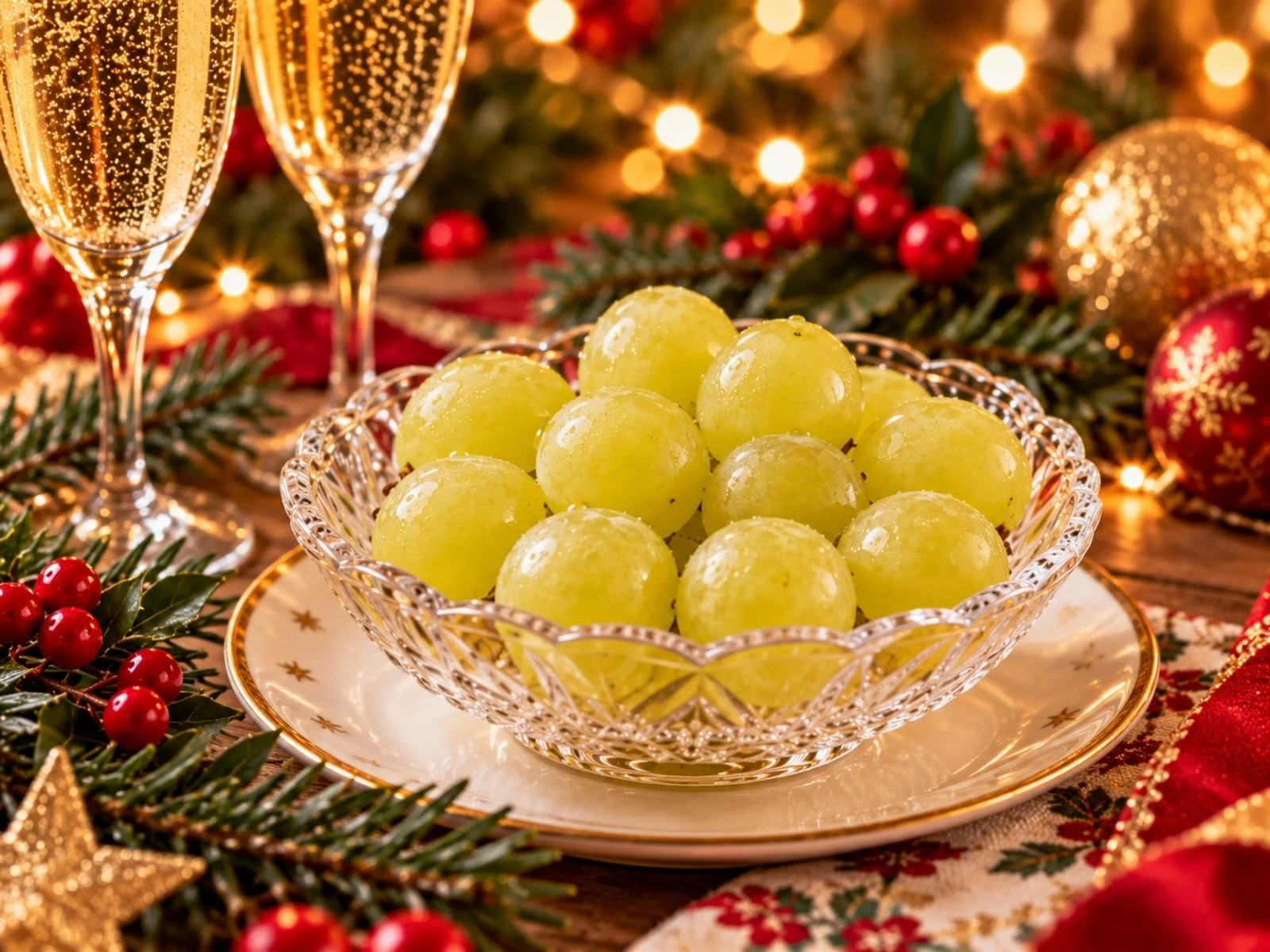
Twelve grapes in twelve chimes sounds easy until you try it. Spanish supermarkets even sell small tins or packets of peeled, seedless grapes specifically for New Year's Eve.
- Red underwear is traditionally associated with good luck for the new year and appears in shop windows throughout December.
- A cotillón is the bag of party accessories, with hats, streamers and noisemakers, often handed out at New Year's Eve celebrations.
- Hotels and restaurants usually offer gala dinners on 31 December. The more popular ones can fill up weeks in advance.
- New Year's Eve runs late in Spain. Dinner comes first, the grapes are eaten at midnight, and the main party often starts afterwards.
Many towns on the coast hold a free outdoor party. In Estepona, it takes place in Plaza del Reloj, with fireworks at midnight. The details are in our Christmas events guide.
8. Christmas and New Year's Eve in Spanish Restaurants: What to Expect
Eating out over the holidays in Spain works a little differently from the rest of the year. If it is your first Christmas here, this is what to expect in restaurants, bars and cafés on the coast.
📋 Set menus on 24 and 31 December
On Christmas Eve and New Year's Eve, most restaurants that open do not serve their usual menu. Instead they offer a menú cerrado, a set menu at a fixed price per person, with several courses served to the whole table. On 31 December it is often sold as a cena de gala, a gala dinner with music.
- Ask what is included. Drinks, cava at midnight, the twelve grapes, the cotillón bag and the party after dinner may or may not be part of the price.
- Expect to pay in advance. Many places ask for a deposit or full payment when you book, and cancellation terms are stricter than usual.
- Book early. Popular places fill up weeks ahead, and for New Year's Eve November is not too early.
- Prices are higher. A festive set menu costs noticeably more than a normal dinner at the same place.
🦃 Christmas Day and New Year's Day
Many restaurants close on the evening of 24 and 31 December and on 25 December and 1 January, or open only for lunch. The ones that open for lunch on these days are busy with families, so book a table. On 1 January lunch starts late, often not before 14:30, because many people went to bed at dawn.
The Costa del Sol has one extra option. Many British and international restaurants and pubs along the coast serve a traditional Christmas Day lunch on 25 December, with roast turkey and Christmas pudding, for those who miss the taste of home.
🕘 What time do people eat?
Spanish meal times apply over the holidays too. Lunch is usually served from about 14:00 to 16:00 and dinner rarely starts before 21:00. On New Year's Eve, dinner usually starts around 21:00 or 21:30, the grapes are eaten at the table at midnight while the countdown plays on a screen, and the music and dancing go on long after. Children are welcome everywhere, including late in the evening.
In December restaurants are also full of cenas de empresa, the Christmas meals of companies and groups of friends. On Friday and Saturday evenings before Christmas, expect long tables, a lot of noise and a cheerful atmosphere.
☀️ Inside or outside? Is it warm enough?
On a sunny day, yes. December afternoons on the coast are mild, with an average high of about 17 °C, and eating lunch on a terrace in the sun is completely normal, often in a sweater and sunglasses. A long Christmas lunch at a seafront restaurant is one of the best things about spending the holidays here, and many beach restaurants stay open in winter.
After sunset it gets cool quickly, with nights around 9–10 °C. Most people eat dinner indoors, and the festive dinners on 24 and 31 December are almost always inside. Terraces that stay open in the evening usually have patio heaters, sometimes blankets, or are enclosed with transparent screens.
Bring a warm layer even when you sit inside. Spanish houses and restaurants are built to stay cool in summer, with tiled floors and thick walls, and heating is often modest. And if you go out to a square after midnight on New Year's Eve, you will want a proper jacket.
☕ Cafés and churros
On the mornings of 24 and 31 December, cafés and bakeries are busy with people buying bread, cakes and last-minute sweets, and many close early in the afternoon. On 25 December and 1 January a lot of cafés stay closed, at least in the morning.
The exception is churros. Chocolate con churros after the New Year's Eve party is a Spanish tradition, and some churrerías open very early on 1 January. Around 6 January cafés and pastry shops sell roscón de Reyes by the slice for the afternoon merienda. If you want a whole roscón, order it from a bakery a few days in advance.
💶 Tips and small details
- Tipping is not obligatory in Spain. For good service, people round up the bill or leave around 5–10%.
- Dress code for gala dinners is smart casual. In ordinary restaurants, anything goes.
- The bill is only brought when you ask for it. Nobody will rush you, especially at Christmas.
9. Three Kings Day in Spain: 6 January
For many Spanish children, the most exciting part of Christmas comes at the very end. On 5 January, towns hold their Cabalgata de Reyes. Melchior, Caspar and Balthazar travel through the streets on floats while sweets are thrown into the crowd.
Bring a bag if you're going with children, because they can collect an impressive amount of sweets. With younger children, stand a little back from the moving floats rather than directly beside the route.
That evening, children traditionally leave their shoes out for the Kings. Presents are opened the next morning, and 6 January is a public holiday. The winter sales traditionally start straight after it.
The weather can change parade plans. In January 2025, Estepona moved its parade forward by a day because of the forecast, while Manilva changed the timing of its parade. Check the town hall website or social media on 4 and 5 January before setting out.
👑 Roscón de Reyes
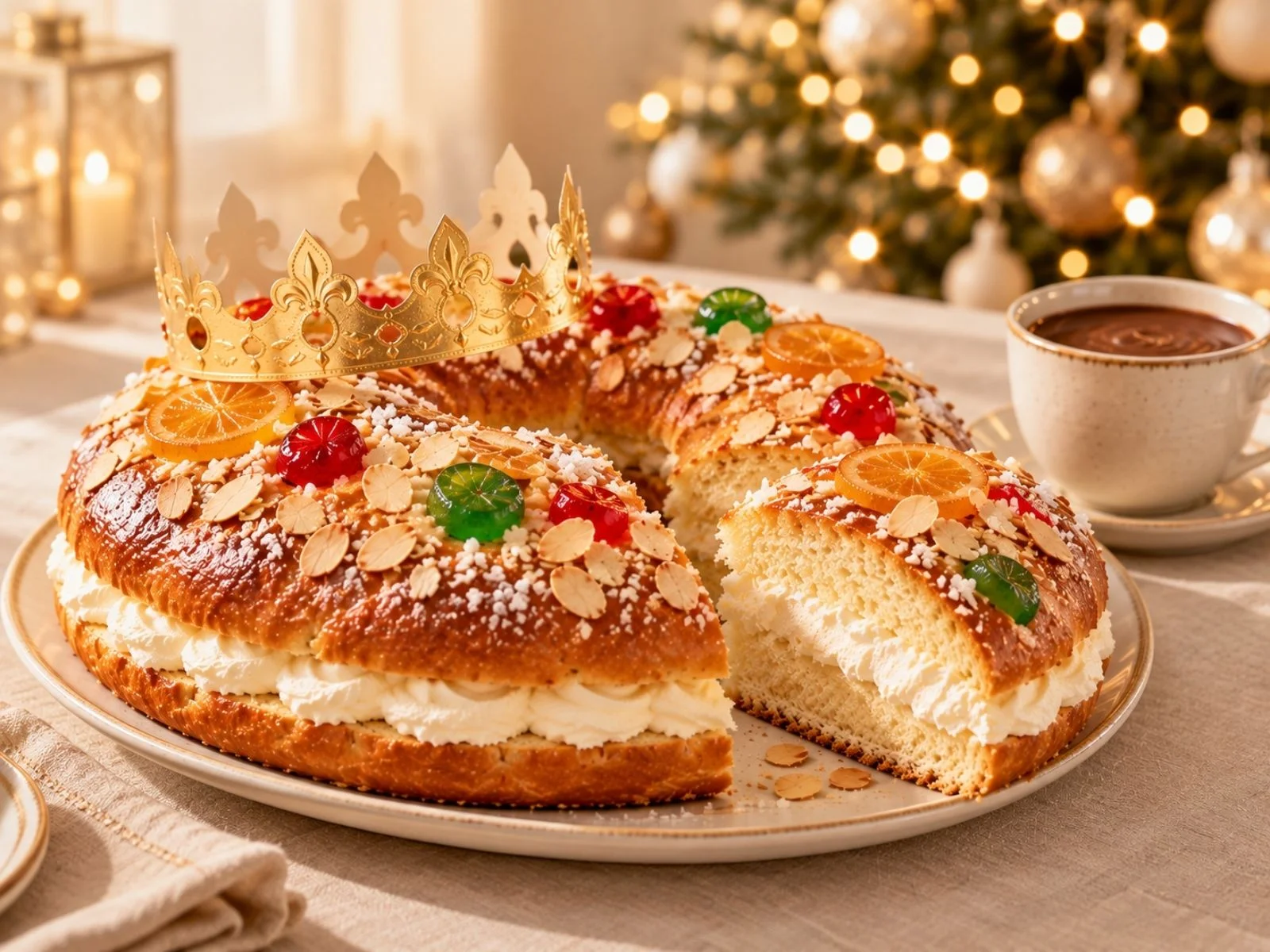
Roscón de Reyes is the taste of 6 January. It is a ring-shaped sweet bread flavoured with orange blossom water and decorated with candied fruit, sugar and flaked almonds, the colours of the fruit standing in for the jewels on a crown.
Bakeries sell plain roscones as well as ones filled with whipped cream, chocolate truffle or custard. Families eat it for breakfast or for the afternoon merienda, usually with hot chocolate or coffee.
Inside are a small figure and a dried bean. Whoever finds the figure gets to wear the paper crown; whoever gets the bean traditionally pays for next year's roscón.
10. Frequently Asked Questions about Christmas in Spain
The best known are the nativity scene (belén), the Christmas lottery El Gordo on 22 December, the family dinner on Christmas Eve, the twelve grapes at midnight on New Year's Eve, and the Three Kings parades on 5 January. Children traditionally receive their main presents on 6 January, and families share a roscón de Reyes that day.
Christmas Day in Spain is quieter than Christmas Eve. Families usually meet for a long, late lunch, often with leftovers and sweets from the night before, and then go for a walk. It is a public holiday, so most shops and supermarkets are closed.
Not in Andalucía or most of Spain, where Boxing Day is a normal working day and shops, offices and banks open as usual. The exception is Catalonia, where 26 December, Sant Esteve, is a public holiday. In Andalucía, the public holidays over Christmas 2026–27 are 7, 8 and 25 December and 1 and 6 January.
The main Christmas meal is eaten on the evening of 24 December. A typical table includes jamón ibérico, cheese and prawns to start, followed by seafood, fish such as sea bream, or roast lamb or suckling pig. In Andalucía, dinner often begins with sopa de picadillo. Turrón, polvorones and mantecados come afterwards, usually with cava.
The best-known tradition is eating twelve grapes at midnight, one with each chime of the clock. Wearing red underwear for luck is also common. Dinner is usually late, and the main party starts after midnight.
Three Kings Day is 6 January and is a public holiday. The Cabalgata de Reyes parades take place the evening before, on 5 January. Children leave their shoes out that night and open their presents from the Three Kings on the morning of 6 January. Many families also give a smaller present from Papá Noel on 25 December.
Some are, mostly for lunch, and they are busy with families, so book ahead. On 24 and 31 December restaurants that open usually serve only a set menu at a fixed price. On the Costa del Sol, many British and international restaurants also serve a traditional Christmas Day lunch with turkey.
Yes, at lunchtime on a sunny day. On the Costa del Sol the average December high is about 17 °C, so lunch on a terrace is normal. In the evening it drops to around 9–10 °C, so most people eat indoors or on terraces with patio heaters.
Roscón de Reyes is a ring-shaped sweet bread flavoured with orange blossom water, decorated with candied fruit and eaten around 6 January. A small figure and a dried bean are hidden inside. Whoever finds the figure wears the crown; traditionally, whoever gets the bean pays for the next roscón.
The "pooping log" is the Tió de Nadal, a Christmas tradition from Catalonia. It is a log with a painted face, a red hat and a blanket. Families "feed" it through December, and at Christmas children tap it with sticks while singing until it "gives" them sweets and small presents.
It is Málaga's biggest gathering of verdiales, one of the oldest folk music and dance traditions of Málaga province. Every 28 December, around 25 groups in colourful ribboned hats perform in Puerto de la Torre, on the edge of Málaga. The fiesta has been held for more than sixty years.
- Public holidays: official calendar of the Junta de Andalucía for 2026 (Decree 101/2025) and 2027 (Decree 84/2026), checked in September 2026
- Local traditions and events: town hall websites of Málaga, Estepona, Manilva, Casares and Mijas
- Weather: climate data for Málaga Airport from AEMET
- Google Maps for all locations
- Article prepared by the Sunset Rental team, who live on the Costa del Sol.
I love traveling and sharing my experiences. For me it's important to share only practical and useful information in the blog, things that actually help, whether you're planning a trip to Costa del Sol or thinking about renting in Spain.
