
Winter Sun on the Costa del Sol: The Honest Guide

I love traveling and sharing my experiences. For me it's important to share only practical and useful information in the blog, things that actually help, whether you're planning a trip to Costa del Sol or thinking about renting in Spain.
Table of contents11
Your insider guide to the off-season — what the weather is actually like, what to do, and why Estepona and Manilva beat anywhere else on the coast when the crowds have gone
Most people who discover the Costa del Sol in summer spend the following January staring at grey skies, thinking: I wonder what it's like there right now. The answer is: warmer than you think, quieter than you'd believe, and — for a very specific kind of traveller — better than August.
This is not a guide that tells you "320 days of sunshine!" and leaves it at that. It is a practical, honest look at what the western Costa del Sol is actually like between October and March — month by month, activity by activity — and why this stretch of coast between Estepona and Sotogrande is the best part of it to base yourself.

Why the Western Costa del Sol Is Different in Winter
The Costa del Sol is a long coastline — over 160 km from Nerja to Manilva. In summer, most of it looks the same: crowded, overpriced, loud. In winter, the differences emerge.
The eastern end (Torremolinos, Fuengirola, Benalmádena) is built for mass tourism. When that tourism disappears in October, those towns hollow out. Restaurants close. The promenade feels desolate.
The western end—Marbella, Estepona, and Manilva—is different. These towns have permanent residents, year-round communities, functioning markets, and restaurants that stay open because locals eat in them. Estepona in particular has invested heavily in its historic center, orchidarium, and cultural program. It doesn't depend on package tourists to feel alive.
And Manilva — directly adjacent to Sotogrande, a 10-minute drive from Estepona — is even quieter in the best possible sense. The promenade at Sabinillas has locals walking dogs at 8 AM. The chiringuitos serve espetos in January. The beaches are yours.
The Weather, Month by Month
The Costa del Sol's climate is Mediterranean with Atlantic influence—wetter than Alicante, warmer than Barcelona, more sheltered than Tarifa. The key word for winter here is "mild." Not hot. Mild.
Here is what you can realistically expect:
The rain, when it comes, falls in short sharp bursts — usually afternoon thunderstorms. Mornings are nearly always clear. The light in winter is lower and softer than summer, which is actually beautiful: golden rather than bleaching white.
What changes: the sea is too cold to swim comfortably December–February (14–16°C). What doesn't change: you can eat outside at lunch every single day of the year on this coast.
What to Pack for Winter on the Costa del Sol
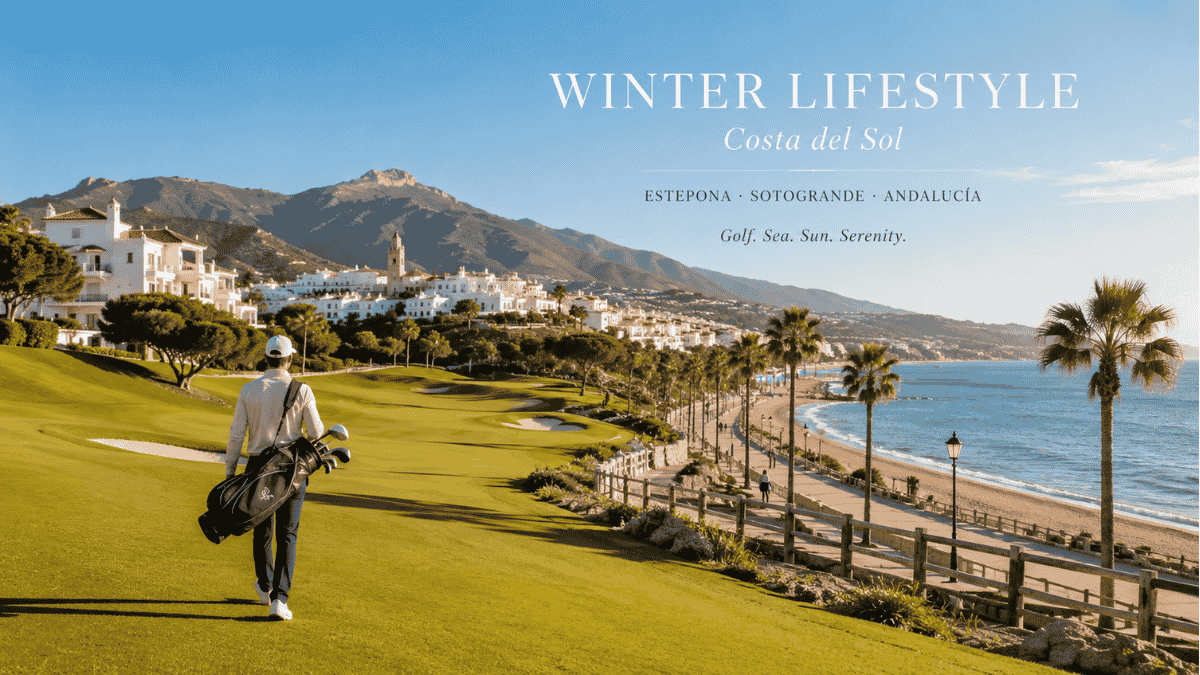
What to Do: The Winter Activities That Actually Work Here
This is where most guides fail. They say "golf and hiking" and move on. Here is the honest breakdown—what works, when, and where.
Best Months For Different Types of Travel
⛳️ Golf — The Best Reason to Come in Winter
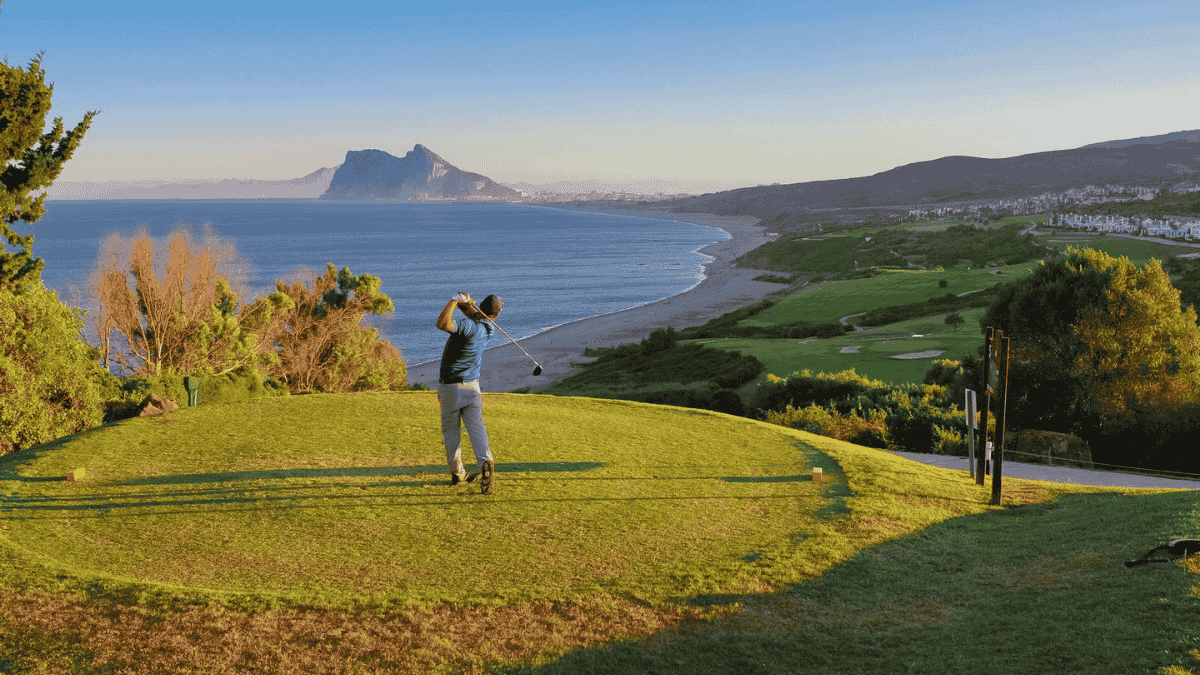
Winter is arguably the ideal time to play golf on the Costa del Sol. The summer heat (often 35°C+ in August) makes afternoon rounds brutal. From October through March, temperatures sit at a perfect 15–22°C, courses are green and recovered from summer wear, and you will almost never wait for a tee time.
The concentration of world-class courses within 20 minutes of Estepona and Manilva is genuinely extraordinary:
- Valderrama — consistently ranked in the world's top 10, host of the 1997 Ryder Cup. Green fees drop significantly in winter. Book as early as possible — access is limited even then.
- Real Club de Golf Sotogrande — original 1964 Robert Trent Jones Sr. design. Excellent winter greens. 15 minutes from Manilva.
- Almenara — three courses through cork oak forest in La Reserva. Great value in winter (fees drop 30–40% vs summer).
- La Reserva Club — premium resort golf with views to Gibraltar and Africa.
- San Roque Club — two championship courses, almost deserted in January and February.
For anyone who plays golf and has never done a winter Costa del Sol trip: this is the single most compelling argument for it.
Prices, booking conditions and insider golf tips on the Costa del Sol.
🐳 Whale and Dolphin Watching — October and November Are Peak
This is the surprise that most visitors don't know about. The Strait of Gibraltar is one of the world's most important cetacean migration corridors. Every autumn, bluefin tuna migrate through the Strait from the Atlantic into the Mediterranean — and orcas, sperm whales, pilot whales, and fin whales follow them.
October and November are the peak months. Boat trips run daily from Tarifa (30 minutes from Manilva along the A-7). On a good day you will see orca pods from the boat. On an exceptional day you can see sperm whales from the coast.
This is not a zoo encounter. These are wild animals in their natural migration — and the scale is extraordinary. If you are visiting in October or November, this should be on your itinerary.
🚶 Hiking — November to March Is the Season
The mountains behind the coast come alive in winter. Los Alcornocales Natural Park — one of the largest cork oak forests in Europe, starting just north of Sotogrande — is at its absolute best from November to February: green, quiet, full of eagles, deer, and wild orchids. Trails start 20–25 minutes from Manilva.
Sierra Bermeja, directly behind Estepona, offers spectacular winter hikes with views across to Morocco and Gibraltar. The rare peridotite rock turns terracotta in the winter light.
In summer, neither park is pleasant to hike — too hot, too dry, too brown. Winter is when they are genuinely beautiful.
🏞️ Day Trips — The Whole of Andalusia Is Yours
A winter base on the western Costa del Sol puts some extraordinary places within easy reach:
- Gibraltar — 20 minutes from Manilva. No passport needed for EU/UK citizens. Barbary macaques, St Michael's Cave, the famous Rock views, and — if you time it right in October/November — orca sightings from the straits. A half-day trip at any time of year.
- Tarifa — 30 minutes west. Europe's wind capital is quiet and beautiful in winter. The old Moorish town, the Atlantic views, the world-class kitesurfing (watching, not necessarily doing), and the excellent fresh tuna at the port restaurants. Go on a clear day and you can see Morocco from the beach
- Ronda — 1 hour north. The most dramatic town in Andalusia, built above a 100-metre gorge. Uncrowded in winter and genuinely magical: the light on the cliffs, the old town, the views. Combine it with a walk around El Tajo
- Granada and the Alhambra — 2 hours east. The most visited monument in Spain. In summer, booking months ahead is essential and queues are punishing. In winter, tickets are easier to get, and the visit is infinitely more pleasant. The snow on the Sierra Nevada behind the city is a bonus.
- Sierra Nevada — 2 hours east. Europe's southernmost ski resort, with a season running December to April. Skiing in the morning, sea-temperature-checking in the afternoon — it is a genuinely unusual combination and one that only this part of Europe offers.
🍽️ Food and Restaurants — Better in Winter
Counterintuitively, restaurants on this coast are often better in low season. The kitchens are less pressured. Chefs are not producing 300 covers a night. The ones that are open year-round tend to be the ones that locals actually use — which means better food at more honest prices.
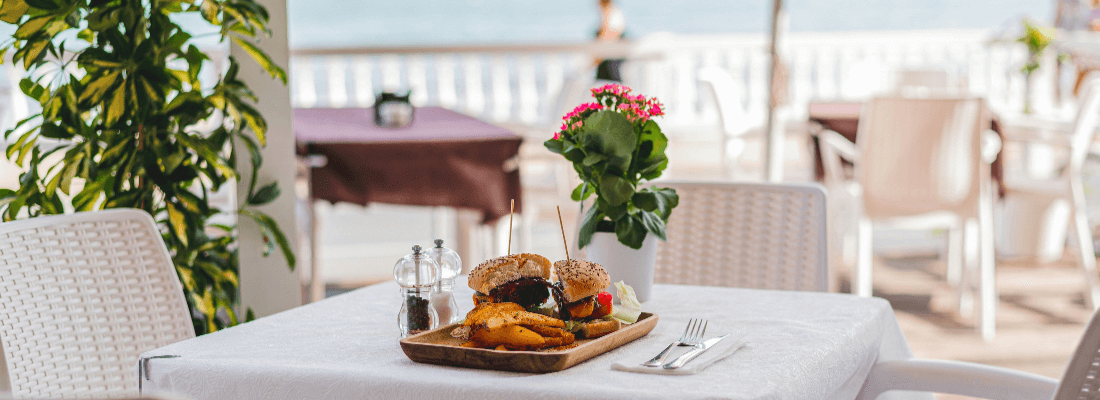
Estepona's restaurant scene is strong year-round: the tapas bars in the old town, the seafood restaurants near the marina, and the chiringuitos that stay open for winter beach walks. In January, a plate of espetos (sardines grilled over open fire on the beach) and a glass of local wine costs less than anywhere else in coastal Spain.
Where to eat, shop and discover local beach clubs, supermarkets and useful spots on the Costa del Sol.
👩💻 The Snowbird Question: Long Stays in Winter
A growing number of northern Europeans—particularly British, German, Dutch, and Scandinavian—come to this coast not for a week but for months. The combination of winter sun, affordable rental rates, and a functioning community makes Estepona and Manilva particularly popular for 4–12 week winter stays.
What they come for: escaping winter without leaving Europe; maintaining a routine (walking, golf, cooking at home); access to everything they need (good supermarkets, healthcare, English-speaking services); and the cost advantage of renting an apartment rather than staying in hotels.
The western Costa del Sol delivers all of this. Manilva in particular — with its permanent residential community, multiple supermarkets, excellent beaches, and proximity to both Estepona and Sotogrande — is one of the best-value long-stay destinations in Mediterranean Europe.
Typical winter rental rates are 30–60% lower than August peak. A well-equipped apartment with sea views and a heated pool that costs €200/night in August is often available for €80–120/night in November through February.
Where to Stay: Why an Apartment Beats a Hotel in Winter
A hotel in winter on the Costa del Sol is a strange experience. Half the facilities are closed. The pool is empty. The restaurant is running a reduced menu. You pay for a breakfast buffet and get four items.
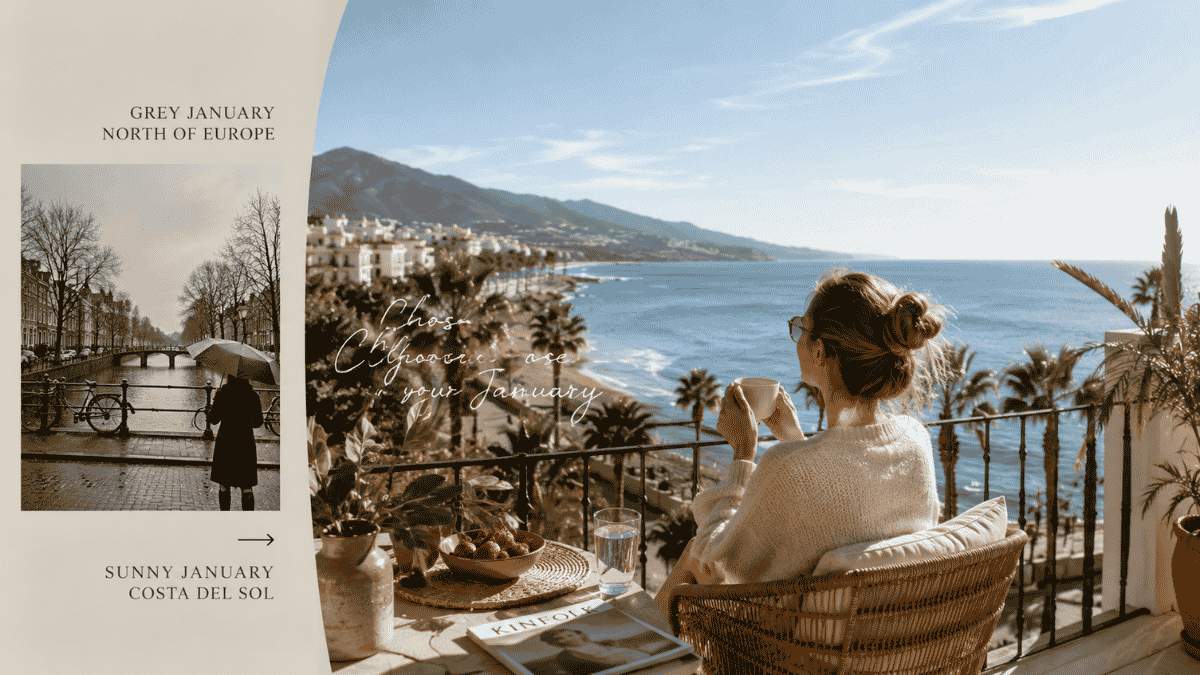
A private holiday apartment is the opposite: it scales with you. You cook breakfast on your terrace in the morning sun. You go for a walk, come back, and make lunch. You have space to work if you are there for a month. You are not paying for facilities you won't use.
For winter, the right areas to base yourself in on the western Costa del Sol are:
Manilva / Sabinillas — closest to the Manilva beaches, excellent value, permanent community feel. Lidl, supermarkets, and local bars within walking distance. 10 minutes from Sotogrande, 15 from Estepona.
La Chullera — between Manilva and Estepona, quieter, sea views, direct beach access. Less urban, more residential.
Estepona — more facilities, bigger town, excellent restaurants and old town. Good base for longer stays.
Casares del Sol — quieter hillside location with views, 5 minutes from Manilva beaches, popular with golf visitors.
Sunset Rental manages fully equipped apartments across all these areas — all hygiene-certified, professionally managed, with local support. Most include pools (several heated, open year-round), sea-view terraces, full kitchens, and good Wi-Fi.
👉 Check availability: sunsetrental.es/booking

The Honest Summary
The Costa del Sol in winter is not for everyone. If you need a beach party, a water park, and a resort that stays open until 3 AM, come in August. But if you want:
- Reliable mild sunshine when northern Europe is grey
- World-class golf at quieter courses and lower prices
- Long walks on empty beaches with good food afterwards
- A base for exploring Andalusia without summer heat and crowds
- An apartment that feels like a home, not a hotel room
- 30–60% lower costs for the same quality of property
— then the western Costa del Sol in winter is one of the genuinely underappreciated travel choices in Europe.
The people who discover it tend to come back. Usually the following winter too.
I love traveling and sharing my experiences. For me it's important to share only practical and useful information in the blog, things that actually help, whether you're planning a trip to Costa del Sol or thinking about renting in Spain.
